A stronger freight market is on the horizon, but for carrier executives, that does not automatically mean easier profits. Between massive domestic infrastructure investments and industrial expansion, heavy-duty capacity utilization is running near maximum levels. Yet, as freight volume recovers, fleets face a familiar trap: expanding equipment faster than they can recruit, seat, and retain qualified drivers.
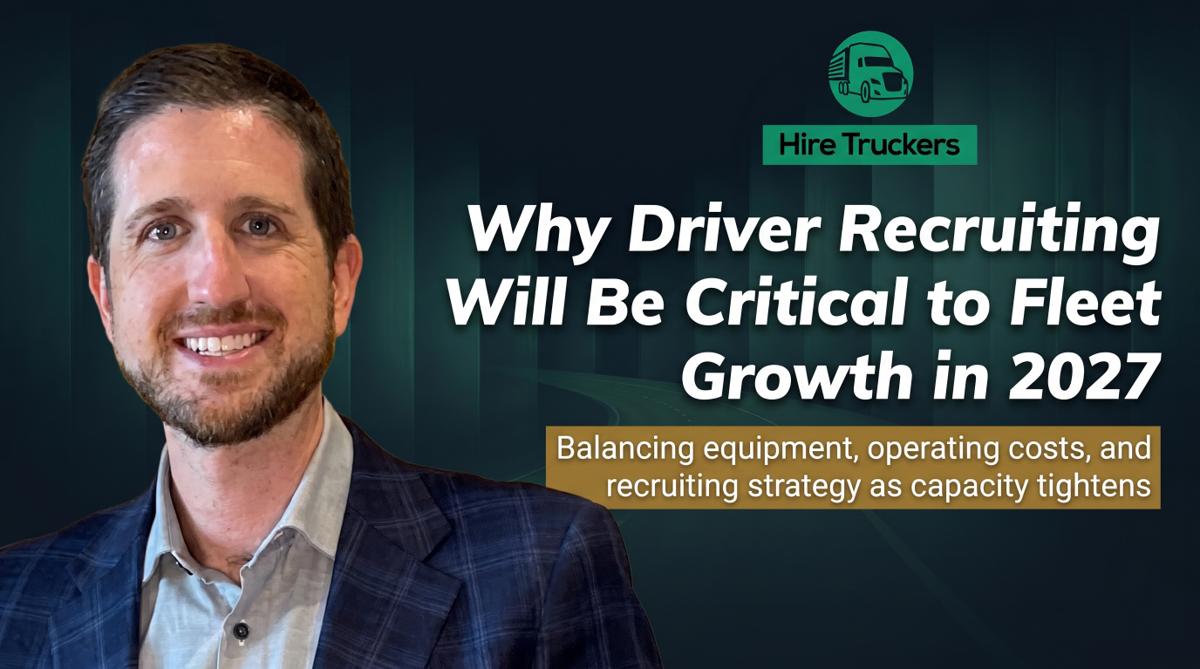
On a recent episode of the Hire Truckers podcast, host Ginger Craddock sat down with Hire Truckers founder Aaron Craddock to discuss FTR market forecasts and explore what transportation leaders must do to turn market momentum into sustainable profitability heading into 2027.
The Re-Industrialization Wave and Market Realities
One of the most notable dynamics shaping the upcoming cycle is where freight demand originates. Unlike previous consumer-led recoveries, current growth is heavily concentrated in commercial build-outs, domestic manufacturing, and massive data center construction.
This shift first appeared in the flatbed sector, where spot rates spiked as steel, machinery, and electrical infrastructure moved across the country. Shortly after, dry van and refrigerated freight followed suit. Everything required to build, power, and supply these facilities must move by truck. However, fleet leaders cannot look at rising demand in a vacuum. Operating costs remain elevated, with diesel prices showing persistent stickiness due to seasonal fuel distillate demands and broader economic pressures.
"The freight contract rate you get might look great, but at the end of the day, you cannot fulfill it if you do not have drivers in the trucks. Fleets have to watch cash flow and account for sticky expenses like fuel, insurance, and recruitment marketing."
When operating margins are tight, ordering equipment without an airtight plan to seat it can quickly jeopardize balance sheets. Carriers run a serious risk when new tractors arrive from the manufacturer only to end up parked against the fence waiting for qualified drivers.
The Real Bottleneck: Driver Alignment and 90-Day Retention
Industry conversations often return to the idea of a driver shortage. Aaron offered a slightly different lens: rather than a pure shortage, the market faces a driver alignment challenge. Drivers are actively working, but many bounce between fleets because expectations set during recruiting do not align with day-to-day operations.
This cycle exposes a critical flaw in how carriers evaluate recruitment success. Marketing teams naturally track cost per hire to measure advertising efficiency. While cost per hire is essential for tuning ad platforms and managing digital budgets, executive leadership must monitor a deeper metric: cost per driver retained past ninety days.
"A three-thousand-dollar sign-on bonus might look great on paper because it lowers initial cost per hire. But if those drivers leave at day sixty, that upfront marketing investment is wasted. Fleet executives need to measure cost per retained driver."
If a carrier brings on one hundred drivers who leave within three months due to over-promising or operational friction, the company pays twice. They absorb orientation, safety vetting, and equipment preparation expenses, only to restart the recruitment cycle from scratch.
The Interplay Between Marketing and the Driver Offer
During their conversation, Ginger and Aaron explored a common dilemma: what matters more, a better driver offer or better recruitment marketing?
The reality is that neither works in isolation. An exceptional compensation package, modern equipment, and predictable home time will not fill trucks if drivers never hear the story. Strategic marketing ensures the offer reaches qualified drivers through the right channels at the right time. Conversely, aggressive marketing paired with a weak or misleading offer leads to poor show-up rates at orientation and high early churn.
Winning carriers take an honest approach. They clearly define the job requirements, explain pay structures without confusing fine print, and highlight the stability of their freight lanes. In an era where driver review boards and social networks instantly amplify driver feedback, carrier reputation serves as an organic recruiting engine or an expensive operational hurdle.
Breaking Down Departmental Silos
Perhaps the most actionable guidance for trucking executives preparing for 2027 is dismantling internal silos. In mid-sized and large carriers, recruiting, safety, dispatch, maintenance, and finance often operate in isolation.
Recruiting hears driver objections regarding pay rates, equipment complaints, or benefits packages long before those issues show up in turnover reports.
Operations knows which customer lanes are expanding or causing excessive detention, directly influencing driver dissatisfaction.
Safety and Maintenance track onboarding bottlenecks and equipment downtime that delay getting seated drivers on the road.
Finance needs real-time visibility into cost per hire and seated tractor utilization to project revenue accurately.
"The most successful fleets communicate proactively across teams. They bring bottlenecks out into the open quickly rather than keeping problems in the dark. That cross-team transparency is what lets carriers scale without taking on unmanageable risk."
When leadership bridges the gap between these departments, constraints surface before they turn into idle equipment. Weekly alignment between recruiting and operations ensures equipment procurement stays synchronized with driver hiring capacity.
Positioning for Sustainable Growth
The transition toward 2027 offers meaningful upside for carriers prepared to capitalize on domestic growth. Navigating this cycle successfully requires disciplined financial management, realistic contract pricing with shippers, and a strategic recruiting pipeline built on retention rather than pure volume. By treating driver recruitment as an integral operational strategy rather than a transactional marketing task, fleets can protect cash flow, keep wheels turning, and secure long-term profitability.
This article was adapted from an interview with Aaron Craddock on the Hire Truckers podcast, hosted by Ginger W. Craddock.




 Daniel Kelly