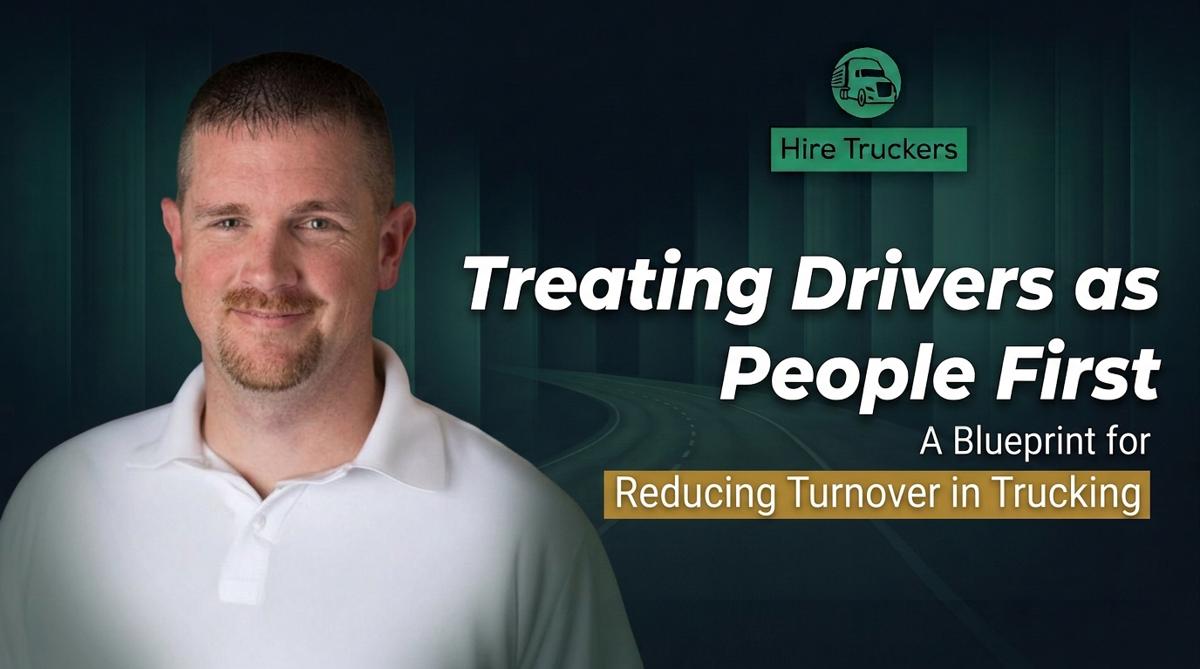
Building strong relationships with drivers represents a significant opportunity for trucking companies looking to reduce turnover and strengthen their workforce. Luke Wimberly, Director of Operations at McElroy Truck Lines, brings 18 years of transportation industry experience and shares valuable insights on creating a people-first culture that supports driver retention.
Why Personal Relationships Matter in Driver Retention
The trucking industry often focuses heavily on pay rates when discussing driver turnover. However, Wimberly explains that within each segment of trucking (flatbed, van, reefer, etc.), pay tends to be relatively consistent across companies. What truly differentiates carriers and influences driver retention is the quality of relationships drivers have with company personnel.
"Before we're in the freight business, we're in the people business," Wimberly emphasizes. "Every person who picks up the phone at your organization is essentially a recruiter, whether they work in safety, maintenance, dispatch, or another department."
The Real Cost of Driver Turnover
When companies fail to prioritize relationships with drivers, the financial impact can be substantial. Wimberly breaks down the costs:
Lost revenue from idle trucks (potentially $5,000 per truck per week)
Recruiting costs per hire ($1,000-2,000 for experienced drivers)
Orientation and training expenses
Travel costs and hotel accommodations
Additional administrative time and resources
For a company losing 100 drivers annually with trucks sitting idle for just one week each, the total cost could exceed $700,000 - and that's a conservative estimate.
Building a Culture of Support
McElroy Truck Lines has successfully reduced turnover by 5% by implementing a culture focused on driver support. This improvement came during challenging market conditions, demonstrating that positive change is possible even in difficult times.
Wimberly advocates for assuming positive intent in all driver interactions. Rather than immediately reprimanding a driver for being late, for instance, take time to understand their situation. This approach doesn't mean abandoning standards - it means addressing issues with empathy and respect.
The Power of Tone in Communication
One simple yet effective technique for improving driver communication is smiling while on the phone. "You can hear a smile," Wimberly notes. This small adjustment can dramatically impact how messages are received and help build stronger connections with drivers.
Phone and computer screens can create emotional distance that makes it easier to be harsh or dismissive. Wimberly encourages staff to imagine having conversations face-to-face, which naturally leads to more considerate and constructive dialogue.
Implementing Change Through Small Steps
Creating lasting organizational change doesn't require dramatic overhauls. Instead, focus on consistent small improvements:
Training staff to answer phones with a positive tone
Sharing company metrics so team members understand their impact
Having regular team meetings to discuss improvement opportunities
Encouraging open communication across departments
Recognizing and celebrating incremental progress
Adapting to Industry Evolution
The transportation industry continues to evolve with new technologies and changing driver expectations. Companies that resist adaptation risk falling behind. Wimberly emphasizes that this doesn't mean abandoning core values - rather, it means finding new and better ways to serve drivers while maintaining high standards.
Creating a Framework for Success
For trucking companies looking to improve their driver retention, the path forward requires:
Recognizing drivers as the company's primary asset
Training all staff members in relationship-building skills
Implementing systems to track and measure improvement
Maintaining open communication channels
Demonstrating flexibility while upholding standards
Investing in ongoing cultural development
By focusing on these fundamentals and committing to continuous improvement, companies can create an environment where drivers feel valued, supported, and motivated to stay for the long term.
This article was adapted from an interview with Luke Wimberly on the Hire Truckers podcast, hosted by Aaron Craddock.


 Daniel Kelly